
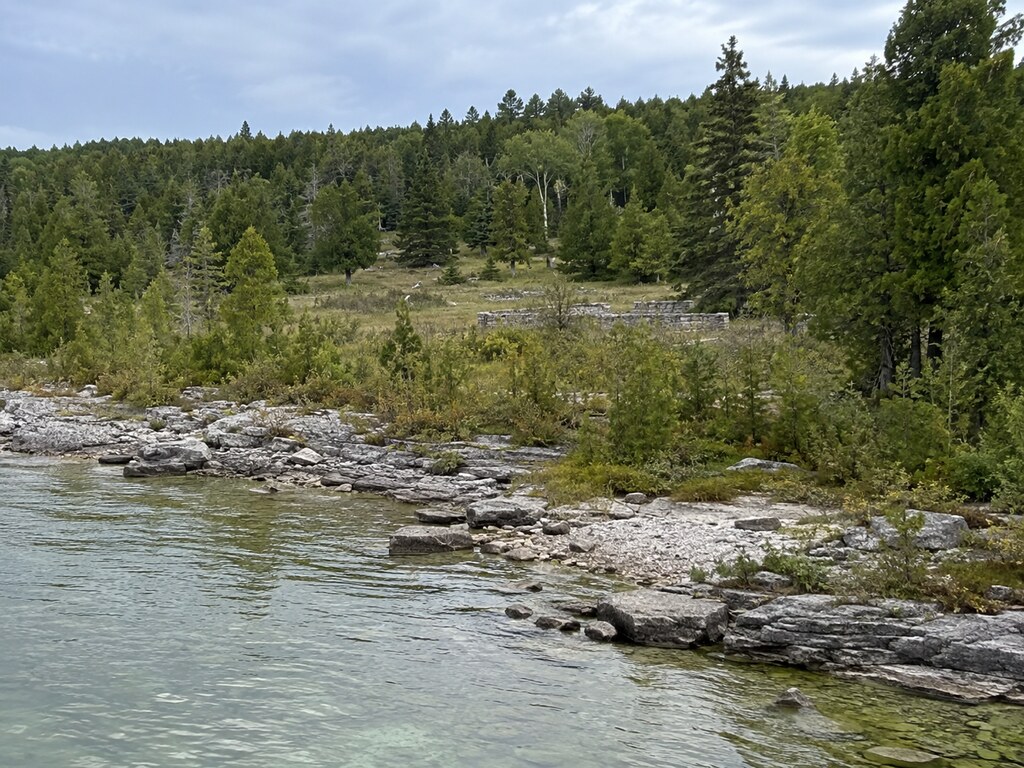
Fort Drummond was a British military and civilian settlement established in 1815 on the west end of Drummond Island near Whitney Bay. Also known as Fort Colyer or Fort Collier, it is an important War of 1812-era archaeological site—but it is not a public ruin that visitors may freely enter.
A Post-War British Stronghold
After the Treaty of Ghent required Britain to return Fort Mackinac to the United States, Lieutenant Colonel Robert McDouall moved the garrison to Drummond Island. The international boundary remained unsettled, and British military families, traders and civilians developed a community around the new post.
The 1822 boundary decision placed Drummond Island in the United States. British forces remained until 1828, when they relocated to Penetanguishene in present-day Ontario. The site was listed in the National Register of Historic Places in 1969; the National Park Service’s Michigan register listings include Fort Drummond.
What Remains—and the Access Limit
Archaeological features include foundation traces, chimney remains, wells, wharf remnants and a cemetery spread across the historic settlement area. The surviving site is on private property and is not an open public attraction. Do not use the map or shoreline as an invitation to enter, land a boat or approach cottages. The responsible way to appreciate Fort Drummond is through documented history and lawful views from public waters.
Plan a Drummond Island Visit
Drummond Island is reached from DeTour Village on the vehicle-and-passenger ferry operated by the Eastern Upper Peninsula Transportation Authority. The crossing takes about 10 minutes, service operates seven days a week, and schedules can change with traffic, weather and seasonal conditions. Check the official EUPTA ferry page and its delay notices before traveling. Credit and debit cards are accepted, with cashless payment preferred.
Use established public roads, parks and shoreline access elsewhere on the island. Never disturb stonework, artifacts, graves or archaeological deposits. Metal detecting and artifact collecting at historic sites can damage irreplaceable evidence and may be illegal.
A Better Place for On-Island History
Because the fort site itself is private, the Drummond Island Historical Museum is a more appropriate starting point for local context when it is open. Confirm museum hours locally before your visit.


Leave a Reply