
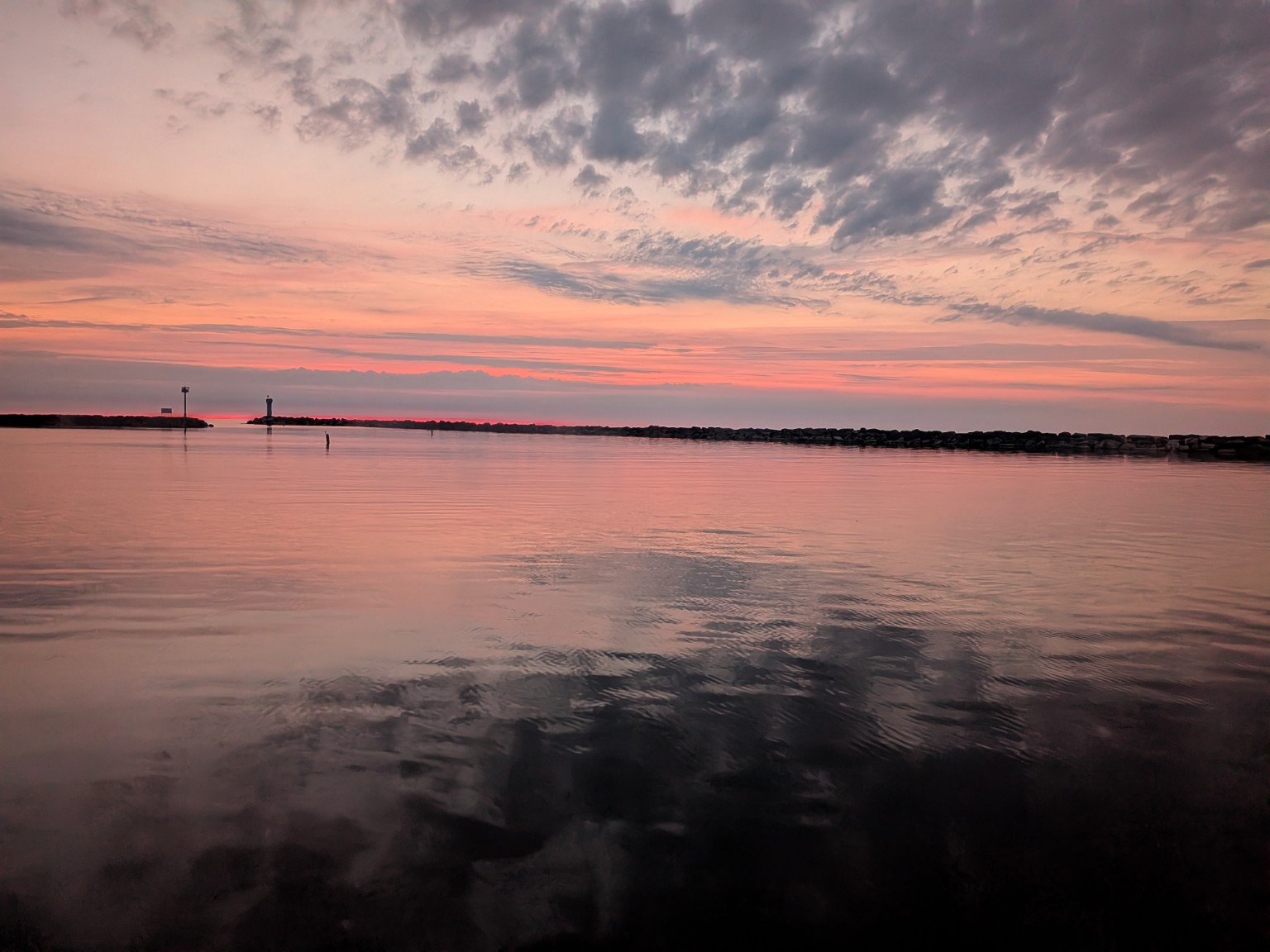
Opinion: Lake America (Lake Ontario) is now the U.S. federal name for the shared Great Lake, while Lake Ontario remains the Canadian, historical, and widely used international name. The debate over the change has mostly been framed as another dispute between the United States and Canada. There is a better argument hiding beneath the politics—one that does not belong to either country alone.
President Donald Trump signed Executive Order 14422 on August 27, 2026, directing the United States government to use “Lake America” in federal references to Lake Ontario. His public explanation centered largely on trade tensions with Canada. Canada rejected the change, and the order governs U.S. federal references; it does not direct what Canadian governments, international organizations or private mapmakers call a shared international lake.
That immediate dispute may dominate today’s headlines, but it is not the most durable way to consider the name. If “Lake America” is to mean anything beyond one administration or one trade fight, America must be understood in its larger geographic sense: North America, a continent shared by Canadians and Americans whose futures meet in the same water.
The Great Lakes do not recognize the border
A line divides Lake Ontario on a map. The water does not follow it. Pollution, invasive species, fluctuating water levels, fisheries and navigation all cross the international boundary. Water entering Lake Ontario through the Niagara River eventually leaves through the St. Lawrence River, connecting communities and ecosystems far beyond any single shoreline.
This physical reality has repeatedly forced two countries—and many governments within them—to cooperate. The Boundary Waters Treaty of 1909 created a lasting framework for preventing and resolving disputes over waters shared by the United States and Canada. It also created the International Joint Commission, with equal representation from both countries.
The Great Lakes Water Quality Agreement, first signed in 1972 and most recently updated in 2012, commits the United States and Canada to protecting the chemical, physical and biological integrity of the Great Lakes. Its vision is explicitly binational: healthy waters benefiting present and future generations of Canadians and Americans.
Water quantity is governed through another layered system. The Great Lakes–St. Lawrence River Basin Water Resources Compact binds the eight Great Lakes states—Illinois, Indiana, Michigan, Minnesota, New York, Ohio, Pennsylvania and Wisconsin. A parallel agreement joins those states with Ontario and Quebec. The arrangements are not perfect, but they reflect a truth established over generations: no single government can protect this connected freshwater system by acting alone.
A continental meaning for “America”
In everyday speech, “America” usually means the United States. That is why many Canadians understandably hear “Lake America” as an assertion of U.S. ownership. Trump’s trade-based explanation reinforces that interpretation.
But America is also the name at the center of two continents. Under that broader meaning, Lake America would not declare that the lake belongs to the United States. It would say nearly the opposite: this water is part of a continental inheritance that neither nation created and neither can responsibly manage alone.
If Lake Ontario is to be called Lake America, the defensible reason is not that the United States can claim it. It is that generations of Americans and Canadians have treated the Great Lakes as a shared North American inheritance.
That interpretation is supported by history more convincingly than the current political reasoning. For more than a century, the two countries have negotiated institutions, standards and compromises because the lakes demand cooperation. Their treaties demonstrate that shared stewardship is not an abstract ideal. It is how the system already works.
The historic name cannot simply be brushed aside
There is also a strong case for changing nothing. “Ontario” was not invented by the modern Canadian province. The name is rooted in an Indigenous language and was used for the lake long before either the United States or Canada existed. Canadian Prime Minister Mark Carney emphasized that history when rejecting the U.S. change, noting the name’s Wendat origin and its association with a lake that is beautiful and great.
That history matters. Replacing an Indigenous-derived name with a modern political one can erase rather than honor the lake’s deeper story. A serious argument for “Lake America” must acknowledge that cost instead of pretending the existing name is merely a label imposed by Canada.
There is another obvious question: if “America” describes shared continental stewardship, why apply it only to Lake Ontario? Lake Superior, Lake Huron and Lake Erie are also divided between the two countries. Lake Michigan is the only Great Lake located entirely within the United States. Nothing about Lake Ontario makes it uniquely continental.
That inconsistency prevents the new name from functioning cleanly as a symbol for the entire Great Lakes partnership. Still, the controversy can open a more useful discussion about what people mean when they call a place American—and whether that word must always imply possession by the United States.
A better argument than ownership
Names carry history, identity and power. The federal government can change the terminology used by its own agencies, but it cannot make a shared lake exclusively American in the national sense. Geography, international law and more than a century of practical cooperation stand in the way.
Yet there is a version of “Lake America” that could outlast the political moment. It would not celebrate one country prevailing over another. It would recognize that the Great Lakes are among North America’s greatest common assets and that their protection requires responsibility on both sides of the border.
Perhaps Lake Ontario remains the better name. Its Indigenous roots and centuries of use offer a compelling reason to preserve it. But if the public is going to debate “Lake America,” the most meaningful argument is not about who owns the lake. It is about who must care for it.
The answer is Canadians and Americans together—just as it has been for generations.
AI transparency: This article was developed with assistance from artificial intelligence and reviewed for factual accuracy, balance and source quality before publication.


Leave a Reply