
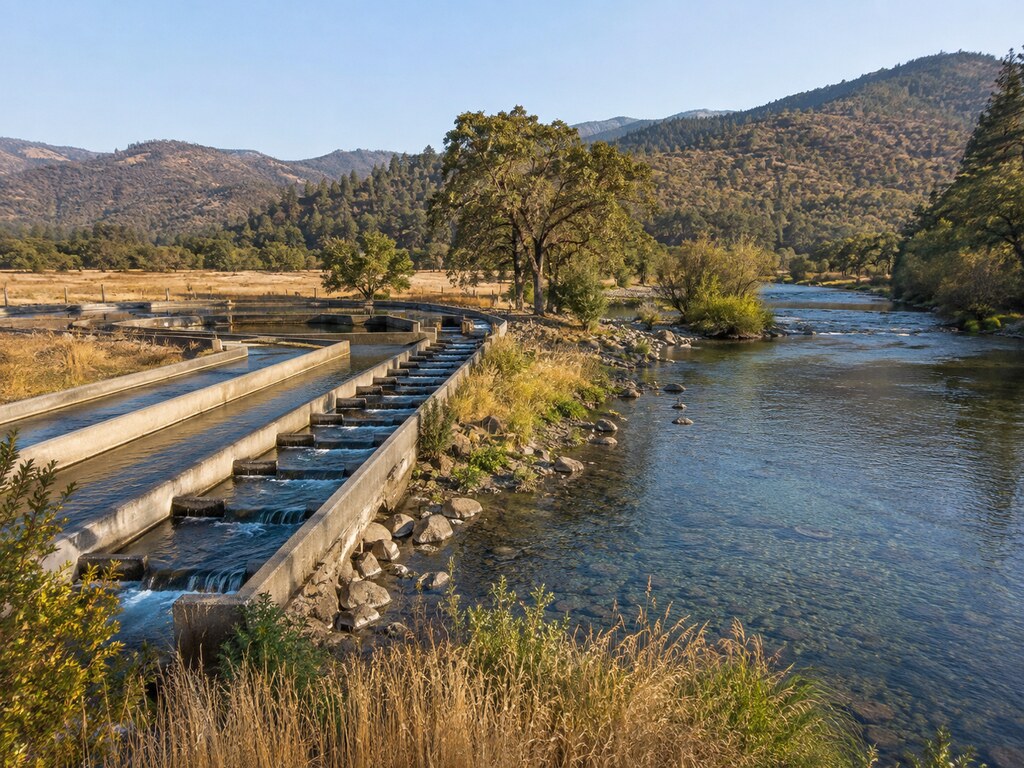
Coleman National Fish Hatchery is a free-to-explore federal fish facility near Anderson, California, where visitors can follow a self-guided route, watch Chinook salmon and steelhead production, and walk beside Battle Creek. The biggest seasonal draw is the fall salmon return, but the hatchery and its short trail system offer a worthwhile conservation stop throughout the year.
Coleman National Fish Hatchery at a glance
- Address: 24411 Coleman Fish Hatchery Road, Anderson, California 96007-8446
- Public hours: Daily, including holidays, 8 a.m. to 4 p.m.
- Main activities: Self-guided hatchery tour, salmon viewing and two short Battle Creek routes
- Best salmon-viewing season: Typically October
- Primary species: Fall and late-fall Chinook salmon and steelhead trout
- Contact: 530-365-8622
Getting there and parking
The hatchery sits about 10 miles southeast of Anderson and 20 miles southeast of Redding. Use the official street address rather than stopping at a similarly named facility: Livingston Stone National Fish Hatchery, north of Redding, is closed to the public.
From southbound Interstate 5, the U.S. Fish and Wildlife Service directs visitors to take Exit 667, continue through the traffic circle onto Deschutes Road, then use Balls Ferry, Ash Creek and Gover roads before turning onto Coleman Fish Hatchery Road. From northbound I-5, use the Gas Point Road exit in Cottonwood and approach by Balls Ferry Road. The entrance is about two miles down Coleman Fish Hatchery Road.
Park only in designated visitor areas at the hatchery. The current facility page does not publish parking capacity, oversized-vehicle details or a general admission fee, so groups, buses and visitors with specific parking needs should call 530-365-8622 before making the drive.
What to see on a self-guided visit
The self-guided route introduces the working hatchery and its role in the Sacramento River system. Coleman was established in 1942 after Shasta and Keswick dams blocked historic salmon and steelhead habitat. Today, the facility raises and releases fall Chinook salmon, late-fall Chinook salmon and steelhead trout.
Expect a working conservation site rather than an aquarium or amusement attraction. Fish visibility changes with the season and the production cycle. Follow posted visitor routes, keep clear of gates and work areas, and never place hands or objects into raceways or fish-handling equipment.
When to visit for returning salmon
Adult Chinook salmon begin returning to Battle Creek in September, with larger numbers gathering at the barrier weir by late September and early October. The Fish and Wildlife Service identifies October as the best month for adult salmon viewing.
Fall Chinook spawning generally runs from early October through mid-November. Steelhead and late-fall Chinook spawning usually occurs from January through mid-February. Spawning commonly takes place on Tuesday and Thursday mornings, but schedules can change with fish returns and operations; call before traveling if seeing that work is the main purpose of your visit.
Battle Creek trails
The official hatchery directory lists two routes: the 1.93-mile Battle Creek Salmon Trail and the 0.10-mile Battle Creek Portage Route. These turn a hatchery stop into a short outdoor outing, especially when temperatures are comfortable and smoke is limited.
Trail conditions, shade and surface accessibility are not fully described on the current public pages. Visitors who need a step-free route or other accommodations should contact the hatchery in advance instead of assuming every trail segment is accessible.
Is fishing allowed at the hatchery?
Plan this as a fish-viewing and conservation visit, not as a general public fishing trip. The current Coleman visitor pages do not identify an everyday public fishing area at the hatchery. Do not cast near hatchery raceways, the barrier weir or operational structures unless staff and current posted rules explicitly permit it.
For a separate fishing stop, Anderson River Park at 2800 Rupert Road provides city-managed Sacramento River access and lists fishing, boating, wildlife viewing and trails. Check current city information and California fishing regulations before angling there.
Facilities and accessibility
Coleman’s official listing confirms public daily access, self-guided touring, trails, an address and a phone number, but it does not provide a detailed inventory of restrooms, drinking water, picnic facilities or accessible routes. Bring water, plan for limited services, and call ahead if a restroom, mobility feature or other accommodation is essential.
Safety and trip planning
- Check the forecast for northern Sacramento Valley heat and carry more water than a short walk seems to require.
- Review wildfire and smoke conditions before driving into the foothills.
- Keep children close around flowing water, concrete channels and operational equipment.
- Stay on signed public routes and obey temporary closures or staff directions.
- Wear sturdy shoes; wet concrete, gravel and creekside surfaces may be slippery or uneven.
- Keep wildlife wild and pack out every item you bring.
A nearby outdoor alternative
If you want a longer walk or legal fishing access after the hatchery, the City of Anderson’s official park directory lists 440-acre Anderson River Park with fishing, boating, wildlife viewing, picnic areas and trails. Its natural-surface outer route can be uneven, so choose activities that match current conditions and your group’s abilities.
Plan with official sources
Before leaving home, confirm current hours and seasonal fish activity on the official Coleman National Fish Hatchery page. Use the official visitor page for the address, driving directions and trail listings. Conditions and operational access can change, so call the hatchery at 530-365-8622 when a specific experience or accommodation is important.


Leave a Reply