
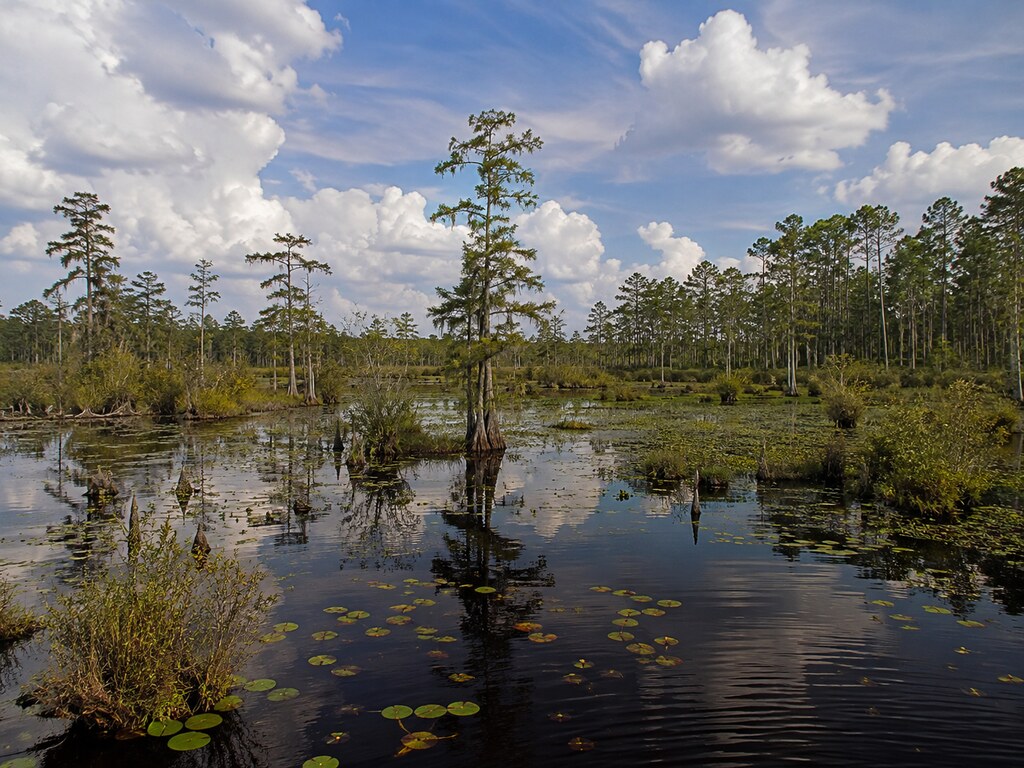
Okefenokee National Wildlife Refuge protects more than 400,000 acres of blackwater wetlands, open wet prairies, cypress forest and pine islands in southeastern Georgia. Visitors can paddle marked water trails, join a guided boat tour, watch wildlife, drive through refuge habitat or explore short land trails—but low water and temporary closures make advance planning essential right now.
Check Current Water-Trail Conditions First
As of September 17, 2026, dry conditions and low water continue to affect many refuge water trails and paddle-in campsites. Coffee Bay, Canal Run and Mixons Hammock are available, while all other overnight platforms are temporarily closed. The Yellow, Pink, Purple and Blue trails remain closed, along with sections of the Red, Green and Orange trails. Conditions can change quickly as water levels rise or fall, so confirm the latest status directly with refuge staff before traveling.
Overnight paddle trips require reservations, which may be made up to two weeks ahead. Call the refuge at 912-496-3331 Tuesday through Thursday from 7–10 a.m. Eastern Time. Day paddlers should also review the official Okefenokee National Wildlife Refuge page for closures and alerts.
Choose the Right Entrance
The main east-side entrance near Folkston is the best starting point for first-time visitors. The Richard S. Bolt Visitor Center, at 4155 Suwannee Canal Road, provides current conditions, orientation and access to the refuge concessionaire. Okefenokee Adventures offers guided boat tours and rents canoes and kayaks; call 912-496-7156 to confirm availability.
- Main entrance near Folkston: visitor center, boat tours, rentals, Swamp Island Drive and walking opportunities.
- Kingfisher Landing: a quieter boat ramp with restrooms and no entrance fee; check trail conditions before launching.
- Stephen C. Foster State Park near Fargo: west-side access, camping and boating; Georgia State Parks fees and rules apply.
- Suwannee River Sill: access for canoes, kayaks and small boats with motors under 10 horsepower.
Paddling, Tours and Land-Based Exploring
A guided boat tour is a practical introduction if you are unfamiliar with swamp navigation. Independent paddlers must remain on marked trails, carry the current refuge map and ask staff about water depth, vegetation, travel time and turnaround points. Low water can make routes slower and more strenuous than mileage alone suggests.
You do not need a boat to experience Okefenokee. The main entrance provides the 7.2-mile Swamp Island Drive and seven short trails ranging from about a quarter mile to 1.5 miles. These options are useful when water trails are limited, although individual facilities may close for maintenance or weather.
Hours, Fees and Facilities
The refuge is generally open from one-half hour before sunrise until 7:30 p.m. from March through October, with boats off the water by 6 p.m. From November through February, closing time is 5:30 p.m. and boats must be off the water by 4 p.m. The daily entrance fee is $5 per vehicle and is valid for seven days; a refuge annual pass is $15. Hours, fees and concession schedules can change, so verify them on the official site before departure.
At the Folkston entrance, the visitor center and concession area are the primary places to ask about accessible facilities, restrooms and current route conditions. Bring drinking water, food, sun protection, insect repellent and a basic first-aid kit; services are limited once you leave the developed area.
Wildlife and Boating Safety
- Do not swim, wade or use paddleboards in refuge waters.
- Never feed or approach alligators or other wildlife.
- Carry a properly sized life jacket for every person; children under 13 must wear one while the boat is underway.
- Motors are limited to 10 horsepower on refuge waters.
- Sign in and out at boat launches where required, and stay on marked routes.
- Pets are not allowed in boats, on boardwalks or in buildings; where permitted, they must remain on a leash no longer than six feet.
Summer is hot, humid and buggy, and afternoon thunderstorms can develop rapidly. Begin early, monitor the forecast and turn around before heat, lightning or low water becomes a problem. In cooler months, bring layers and expect large temperature swings between morning and afternoon.
Plan a Responsible Visit
Stop at the visitor center or speak with refuge staff before entering the backcountry. Pack out all trash, keep noise low around wildlife and avoid blocking ramps or emergency access. For current alerts, trail status, fees and official rules, use the U.S. Fish and Wildlife Service visitor information and refuge rules page.


Leave a Reply