
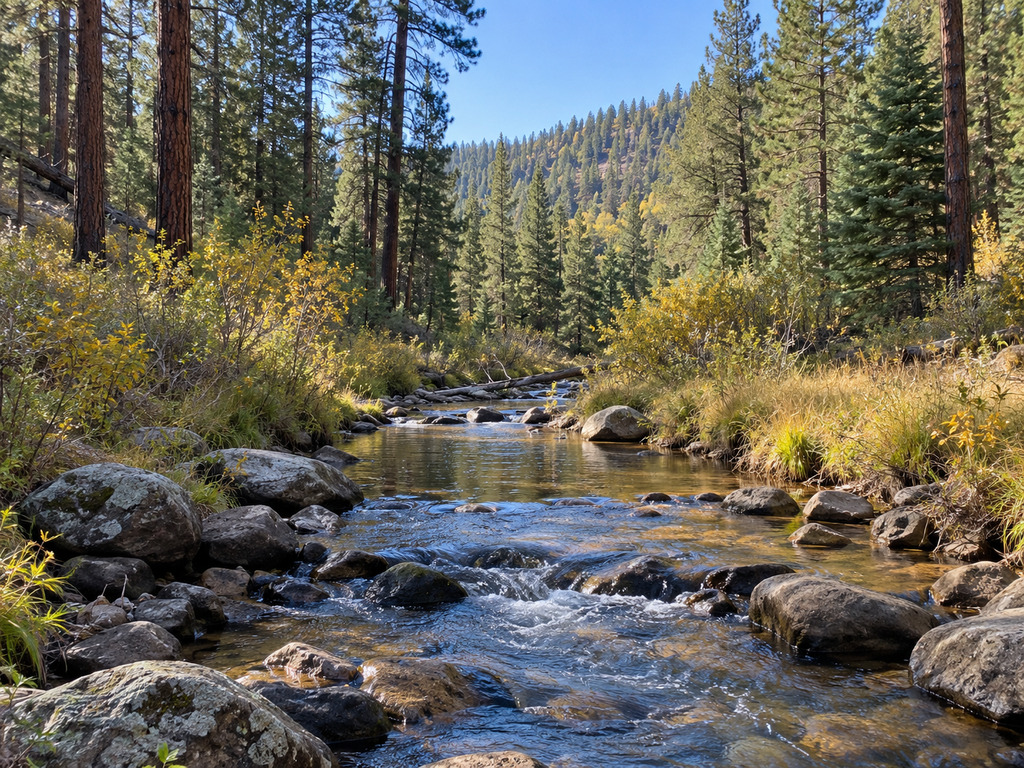

Canyon Creek Fish Hatchery is a working Arizona Game and Fish Department facility deep in the Tonto National Forest. Its official page identifies public recreation and educational interpretation among the site’s goals, but it is not a roadside attraction: the final approach is narrow, unpaved, steep and winding. This guide focuses on the practical details to verify before you leave Highway 260.
Why visit Canyon Creek Fish Hatchery?
The hatchery has operated under the Arizona Game and Fish Department since 1969 on U.S. Forest Service land. Its current production system includes 12 covered raceways. According to the department, the facility raises Gila trout, rainbow trout and Arctic grayling and produces an average of about 80,000 pounds of trout per year. Much of that production supports stocking in Arizona’s White Mountains.
The conservation story is especially important. In 2018 the hatchery received Gila trout eggs from Mora National Fish Hatchery and began developing Arizona’s first Gila trout broodstock program. The on-site program uses six 1,500-gallon circular tanks and is designed to support both conservation and future recreational fishing.
Current visitor status and hours
As of October 7, 2026, the official Canyon Creek Fish Hatchery page lists the facility as open daily from 8 a.m. to 3 p.m., except Thanksgiving and Christmas. The page does not define which visitor areas are currently open, so confirm access directly with hatchery staff before making the remote drive.
New Zealand mudsnails were confirmed about three miles downstream in 2023, prompting a temporary hatchery closure while Arizona Game and Fish reviewed biosecurity. The current facility page now lists daily hours, but it does not promise a self-guided raceway tour, fish feeding or access to production areas. Call the hatchery at 928-535-5475 to confirm the visitor experience and any biosecurity limits, especially after storms.
Driving directions and road conditions
- From Payson, travel east on Arizona Highway 260 for roughly 45 miles.
- Turn south onto Young Road, also signed as Forest Road 288 or FR 512 on some Forest Service information.
- Continue about three miles, then turn east onto Forest Road 33 beneath the power line.
- Follow FR 33 about five miles to the hatchery.
The official hatchery page describes Young Road as a wide, maintained dirt road and FR 33 as narrow, steep and winding. The nearby Tonto National Forest recreation page advises four-wheel drive or chains after heavy rain or snow. There is no reliable shortcut around those conditions: check the forecast, allow extra time, avoid driving after dark, and turn around if the road exceeds your vehicle or experience.
What to expect at the visitor center
This is an active production facility, and its current page emphasizes fish culture, the Gila trout broodstock program, outdoor recreation and educational interpretation. Keep expectations realistic: the department does not promise a guided tour, visitor-center access, outdoor raceway access or a fish-feeding experience on the current page. Ask staff what is available on the day of your visit.
The surrounding high-country habitat supports birds such as herons, kingfishers, bald eagles, black hawks and ospreys. The agency also lists deer, elk, turkey, bobcat, mountain lion, coyote and black bear in the broader area. Observe wildlife from a distance and do not leave food or trash where animals can reach it.
Accessibility, facilities and trip timing
The agency does not publish detailed visitor-area, accessibility, parking-surface or restroom information on the hatchery page. Travelers who need a specific facility or accommodation should call ahead rather than assume the steep dirt-road approach or site layout will work for them.
Dry-weather visits are the simplest. Summer monsoon storms can damage unpaved roads, while winter snow and ice can make the last five miles difficult. Carry drinking water, basic emergency supplies, a paper or offline map and enough fuel to return to Highway 260. Cell service should not be treated as guaranteed.
Fishing nearby—not inside the hatchery
The hatchery visit and a fishing trip are separate activities. For anglers, Canyon Creek itself offers public fishing opportunities at other designated access points. The nearby Upper Canyon Creek Campground page says the stream is popular for rainbow trout and notes a four-trout limit with artificial flies and lures only. Regulations can change, so verify the current Arizona fishing rules and license requirements before casting.
For the precise special-regulation reach and parking approach, use our Canyon Creek O.W. Bridge fishing guide. If wet roads make FR 33 a poor choice, Black Canyon Lake is a distinct high-country alternative with its own seasonal road considerations.
Protect Canyon Creek from invasive species
New Zealand mudsnails were confirmed in lower Canyon Creek about three miles downstream of the hatchery. Arizona law requires people leaving an affected water to clean, drain, dry and decontaminate equipment before using it in another Arizona water. The department’s Canyon Creek mudsnail notice gives the approved procedures. Even if your hatchery stop does not involve the water, follow those rules after any nearby fishing or wading.
Quick planning checklist
- Confirm current visitor access by calling 928-535-5475.
- Check weather and unpaved-road conditions before leaving Highway 260.
- Visit between the listed 8 a.m. and 3 p.m. hours; avoid Thanksgiving and Christmas.
- Follow posted biosecurity rules and enter only the visitor areas staff identify as open.
- Bring water, navigation, fuel and emergency supplies for a remote forest-road drive.
- If fishing elsewhere on Canyon Creek, carry the proper license, follow current special rules and decontaminate gear.
Explore more from the site at the Outdoor Adventures shop.


