
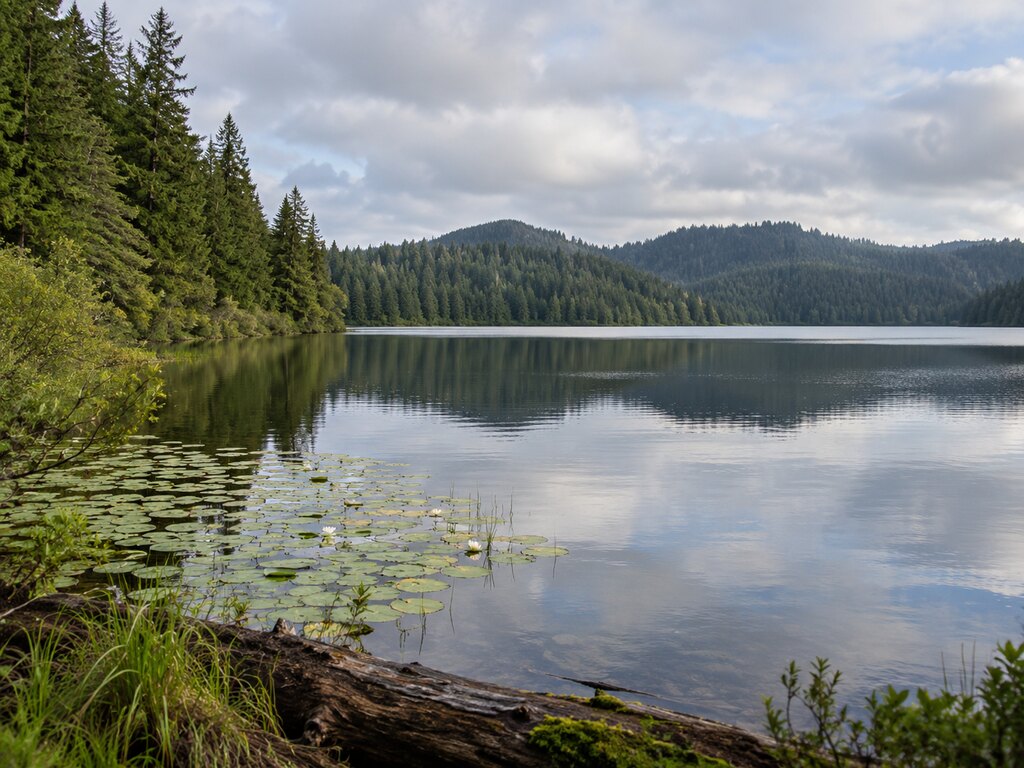
Lake Ozette is a remote, road-accessible fishing and paddling destination on the northwest side of Washington’s Olympic Peninsula. The National Park Service identifies two launch areas—the developed Ozette Ranger Station/campground area and Swan Bay—while the Washington Department of Fish and Wildlife lists Lake Ozette as a named lowland-lake fishery. This guide focuses on how to reach the water, what each access offers, the 2026 fishing rules and the wind and cold-water hazards that matter most.
Lake Ozette at a Glance
- Primary access: Ozette Ranger Station and adjacent campground area at the end of Hoko-Ozette Road
- Second access: Swan Bay Boat Launch at the end of narrow Swan Bay Road
- Current status: the NPS reports the Ozette area and primitive campground open as of September 7, 2026
- Best NPS paddling window: July through October, when winds are generally lighter and water is warmest
- 2026 fishing season: last Saturday in April through October 31
- Map point: Ozette Ranger Station, 21261 Hoko-Ozette Road, Clallam Bay, WA 98326
Getting There and Choosing a Launch
From State Route 112, turn onto Hoko-Ozette Road and follow it into Olympic National Park. The road is long, winding and remote, with limited services and unreliable cellular coverage. Fill the fuel tank before leaving the highway corridor, download maps and allow more time than the mileage suggests. The park’s current conditions page also warns that SR 112 has experienced closures and detours from flooding and landslides, so check both NPS and Washington State Department of Transportation notices before departure.
The Ozette Ranger Station/campground area is the simplest first destination because it combines parking, trail orientation and lake access in one developed zone. NPS materials also identify Swan Bay as a launch site. The superintendent’s current compendium describes Swan Bay Road as narrow and curving, ending at a parking area and boat ramp. Trailers should proceed slowly, yield early and avoid blocking the turnaround.
Parking, Facilities and Accessibility
Use designated parking only at both access areas and keep trailer lanes and emergency access clear. Ozette Campground is primitive and currently operates first-come, first-served. The NPS notes that it can close during winter flooding. Services are limited compared with Lake Crescent or the busier park gateways, and neither fuel nor a full-service marina should be expected at the lake.
Accessibility can vary with lake level, weather and the specific launch surface. The current NPS pages do not provide enough detail to promise an accessible transfer, dock or route at either launch. Travelers who need a firm, step-free route should contact Olympic National Park before driving to Ozette and have an alternate access plan.
Fishing Lake Ozette in 2026
The WDFW Lake Ozette record highlights yellow perch, with summer fishing improving after the April–May spawning period and opportunities from both shore and boat. Olympic National Park’s 2026 rules are more specific than a general statewide lake listing and control fishing inside the park.
- The lake is open from the last Saturday in April through October 31, 2026.
- Use an artificial lure with one barbless single-point hook.
- Fishing is catch-and-release except that yellow perch, largemouth bass, pikeminnow and bullhead have no daily, size or possession limit under the park chart.
- Fishing is allowed from one hour before official sunrise until one hour after official sunset.
- A Washington recreational fishing license is not required for this inland park water, but rules differ for Pacific Ocean fishing and salmon or steelhead catch-record cards.
Regulations can change in response to conservation needs. Read the current Olympic National Park fishing page and check posted notices at the access before fishing.
Shore Fishing Versus Boat Fishing
Shore anglers should focus on durable public-access surfaces near the developed Ozette area without trampling wetland vegetation or occupying a launch lane. Water lilies and shallow margins can hold perch in summer, but shore reach is limited by dense forest and marshy edges. A small boat, canoe or kayak opens substantially more water.
Boat anglers gain access to protected coves and offshore structure, but distance is deceptive on this large lake. Choose a route that preserves an easy return against the wind. Motorized boats must stay at 5 mph or no wake within 300 feet of shore near the Ranger Station and campground beach, and within 150 feet of other Lake Ozette shorelines.
Paddling and Backcountry Camping
NPS describes Lake Ozette paddling as easy to difficult depending on wind. Ericson’s Bay is about four miles from the developed launch area, and boat-accessible backcountry campsites make overnight travel possible. Do not treat that distance as a casual float: a headwind can turn the return trip into hours of exposed paddling.
A wilderness permit is required for overnight stays in undeveloped park areas. Pets are not allowed on park trails or in backcountry areas, including boat-in lake camps. Confirm campsite rules, food-storage requirements and permit availability before launching; permits and bear canisters are not available at Ozette Ranger Station.
Cold Water, Wind and Boating Safety
- Wear a life jacket: Lake Ozette remains cold even in summer, and cold shock can disable a swimmer quickly.
- Watch the wind: sudden strong winds and waves are a documented Ozette hazard. Stay close enough to shore to land safely without violating sensitive areas.
- Leave a float plan: tell someone which launch, route and return time you expect to use.
- Carry navigation: download maps and bring a waterproof backup; cellular service is not dependable.
- Check the craft: drain, clean and dry boats, trailers, waders and gear before entering park waters to prevent aquatic invasive species.
- Pack for self-rescue: bring warm layers in a dry bag, rain protection, light, whistle, repair supplies and more food and water than a short outing seems to require.
Nearby Alternatives and Trip Pairings
The Ozette trailheads behind the ranger-station area lead toward Cape Alava and Sand Point, but coastal hiking is a separate undertaking governed by tides, wilderness permits and food-storage rules. Do not add a nine-mile beach loop after a long paddle unless the group has enough daylight and the correct tide window.
For a broader peninsula itinerary, use our practical Olympic National Park guide. For a more developed freshwater alternative, compare the Fairholme launch at Lake Crescent’s west end with the Storm King launch at its east end. For saltwater access along the Strait of Juan de Fuca, compare Sekiu Water Access with Pillar Point. Each destination has different licenses, seasons and boating conditions.
Final Checklist
- Confirm the Ozette area is open on the NPS conditions page.
- Check SR 112 and Hoko-Ozette Road travel conditions.
- Choose the Ranger Station/campground access or Swan Bay before leaving cell service.
- Carry the 2026 park fishing rules and use only permitted tackle.
- Bring a properly fitted life jacket and cold-water clothing.
- Clean, drain and dry watercraft and fishing gear.
- Use designated parking and keep launch lanes clear.
- Obtain a wilderness permit before any boat-in overnight stay.
Lake Ozette rewards careful preparation with one of the Olympic Peninsula’s quietest road-accessible water experiences. Treat the lake as remote, respect the park’s protective fishing rules and turn back early when wind begins building.


Leave a Reply