Mackinac Island: A Tale of Wild Beauty and Timeless History

Tucked into the shimmering expanse of Lake Huron, Mackinac Island (MI) is a gem for anyone who loves nature with a side of history. On a recent trip, I found myself standing at 45.84959011, -Perched in the shimmering waters of Lake Huron, Mackinac Island (MI) is a small slice of wilderness steeped in history. At coordinates 45.84959011, -84.61880771, a historical marker on Market Street stands as a silent storyteller, unveiling the island’s centuries-old saga. Spanning less than 4 square miles, this car-free haven blends rugged trails, stunning shores, and echoes of the past—making it a dream destination for outdoor enthusiasts.

A Tapestry of Time

The marker’s tale begins in 1670, when Jesuit priest Father Claude Dablon weathered a brutal Michigan winter on the island. Snow-laden pines and icy cliffs framed his solitude, a scene that still greets adventurers today. By 1781, the British swept in, turning Mackinac into a bustling center for military strategy and fur trading—trappers likely trudged its trails, pelts slung over their shoulders. The Americans claimed it in 1796, only to lose it to the British again during the War of 1812. Peace brought a new chapter in 1817, as John Jacob Astor’s fur empire took root, making the island a nexus of commerce (dig into Astor’s story here). When the fur trade faded in the 1830s, Mackinac pivoted to welcome travelers seeking its wild allure—a legacy that endures.

An Outdoor Haven

Mackinac Island is a playground for those who crave nature untamed. No cars clutter its roads; instead, horses clop and bicycles hum, letting the sounds of wind and waves take center stage. The 8.2-mile M-185 perimeter road hugs the shoreline, offering a flat, scenic loop with Lake Huron’s turquoise expanse stretching to the horizon (map the route here). It’s a cyclist’s paradise, where the air carries a hint of cedar and salt.

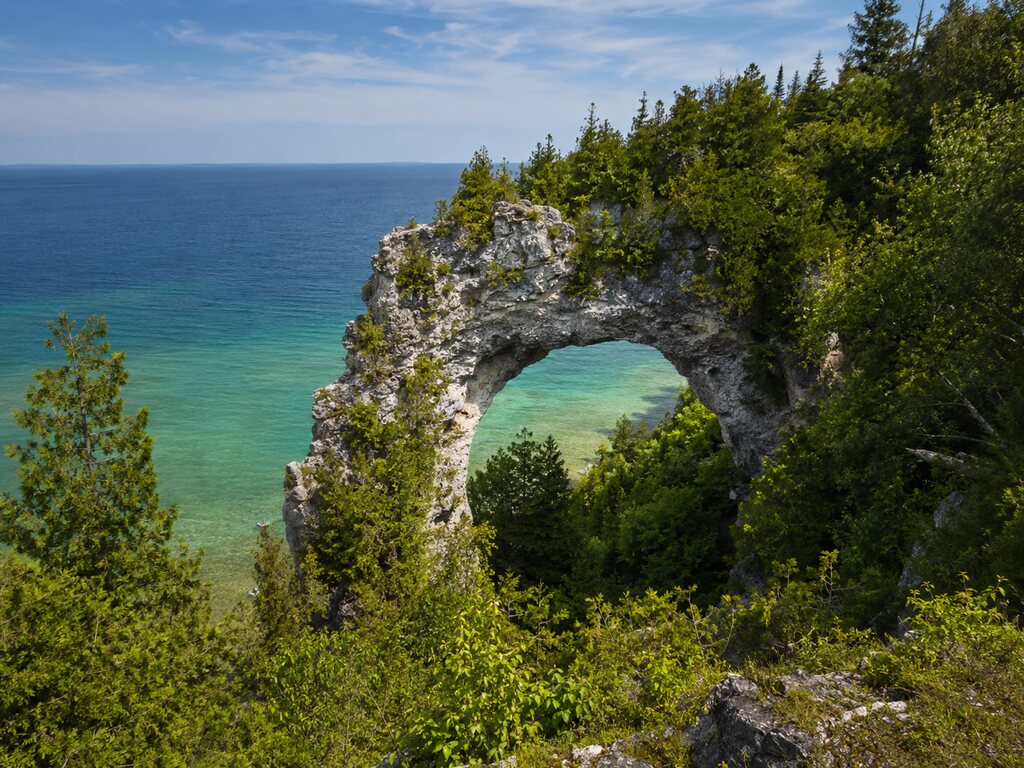
Hikers find their own treasures in the island’s interior. Trails wind through limestone bluffs and thick forests, leading to wonders like Arch Rock—a natural limestone formation soaring 146 feet above the lake, framing views that stun in any season (trail details here). For a quieter escape, the Tranquil Bluff Trail weaves through hushed woods and rocky outcrops. With over 70 miles of paths, the island invites exploration (see the full trail map).

Where History Meets the Wild

Mackinac’s past isn’t just a footnote—it’s etched into the landscape. That Market Street marker sits near where fur traders once bartered, their voices long faded into the breeze. Up the hill, Fort Mackinac stands watch, its cannons poised over the Straits, offering a glimpse of soldier life and sweeping vistas (plan a visit). The island’s limestone bones, shaped by ancient glaciers, reveal caves like Devil’s Kitchen—a shadowy nook carved into the shore, whispering secrets of time.

Planning the Adventure
  • Getting There: Ferries from Mackinaw City or St. Ignace whisk visitors across the lake, promising scenic rides (schedules here).
  • Best Times: Summer hums with energy, while fall paints the forests in fiery hues. Winter turns it into a snowshoeing retreat.
  • Essentials: Bikes or sturdy boots are a must. Layers fend off the lake’s brisk touch.
  • Basecamp: On-island camping is rare, but nearby Mackinaw Mill Creek on the mainland pairs well with day trips (camp details).
The Enduring Call

From the Market Street marker to the trails threading its heart, Mackinac Island weaves a story of resilience and raw beauty. It’s a place where history lingers in the rustle of leaves and the crash of waves, where every path promises both adventure and a step back in time. For those drawn to the wild and the storied, Mackinac waits.

Posted in ,

Leave a Reply

Discover more from Outdoor Adventures

Subscribe now to keep reading and get access to the full archive.

Continue reading