
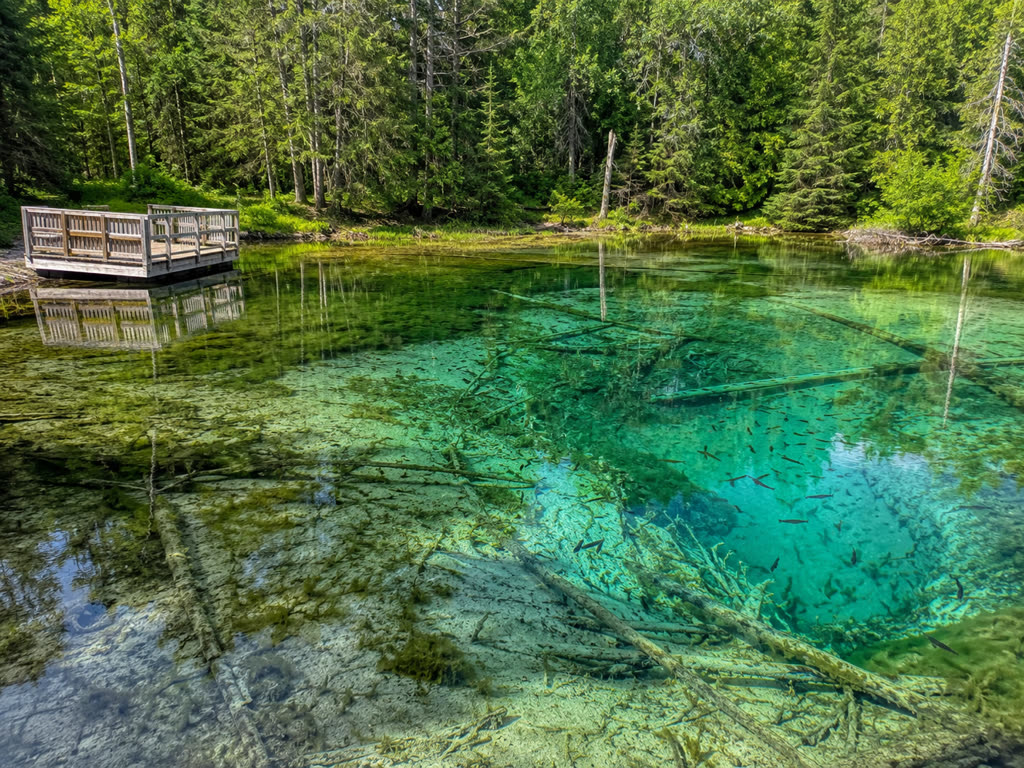
Hidden in the forests northwest of Manistique, Kitch-iti-kipi offers one of the most unusual views in Michigan’s Upper Peninsula. Also known as “The Big Spring,” this emerald pool is the centerpiece of Palms Book State Park. Visitors glide across the remarkably clear water on a self-propelled observation raft, looking down at trout, submerged tree trunks and shifting sand far below.
Michigan’s Largest Freshwater Spring
Kitch-iti-kipi spans about 200 feet across and reaches roughly 40 feet deep. More than 10,000 gallons of water per minute rise through fissures in the underlying limestone, keeping the spring at a steady 45 degrees Fahrenheit throughout the year.
The spring’s color changes with the sky, angle of the sun and surrounding forest. Clear water reveals pale logs on the bottom, trout moving through the pool and patches of sand that appear to boil as groundwater pushes upward. The result feels almost tropical, but the dense hardwood and evergreen forest unmistakably belongs to the Upper Peninsula.
Ride the Observation Raft
The park’s signature experience is its manually operated observation raft. Visitors board the broad platform and turn a large wheel to move the raft along a cable across the spring. An opening in the center provides a direct view into the water while railings offer views across the entire pool.
The Michigan DNR lists the raft as open from 8 a.m. to dusk. Both the path to the spring and the self-guided raft are accessible. Because visitors operate the raft together, the short crossing is part sightseeing trip and part shared experience. Take your time at the viewing opening, then help keep the platform moving so others can enjoy it.
When to Visit
Summer brings deep green forest and long daylight, but it is also the busiest season. Arriving early in the day generally makes parking and the raft experience easier. Spring and fall can offer cooler temperatures, changing foliage and a quieter visit. In every season, Upper Peninsula weather can change quickly, so bring layers and rain protection.
Bright conditions can make the spring’s turquoise and emerald colors especially vivid, although reflections may obscure the deepest views from some angles. A polarizing filter can help photographers manage glare. Keep cameras, phones and other objects secure around the water—the DNR prohibits placing or launching objects in the spring, including underwater cameras.
Important Rules and Safety
Kitch-iti-kipi is a viewing destination, not a swimming or fishing hole. Swimming, bathing, skin diving, scuba diving, fishing, boating and placing any object in the spring are prohibited. The observation raft may be used only for viewing. These restrictions protect the water, wildlife and geological features that make the spring special.
Children should remain supervised near the raft and water. Stay behind railings, follow posted instructions and allow visitors with mobility needs room to board comfortably. Pets and other park-use questions should be checked against current Michigan state park rules before your trip.
Plan Your Stop at Palms Book State Park
Use the park’s official address at 1380 Sawmill Road, Manistique, Michigan 49854. The park sits about seven miles northwest of Indian Lake State Park near the northern end of M-149. Follow signs for Palms Book State Park or “The Big Spring.” Modern restrooms, picnic space, a playground and a seasonal park store are among the listed amenities.
Palms Book State Park does not have a campground. Travelers who want to stay nearby can consider Indian Lake State Park, while hikers can add the nearby Indian Lake Pathway. Kitch-iti-kipi also fits naturally into a longer Upper Peninsula route that includes Fayette Historic State Park or Pictured Rocks National Lakeshore.
Before driving north, check the official Michigan DNR Palms Book State Park page for current hours, closures, entry requirements and seasonal services. Whether it is your main destination or a short detour, Kitch-iti-kipi delivers a memorable look beneath the surface of Michigan’s wild Upper Peninsula.


Leave a Reply