
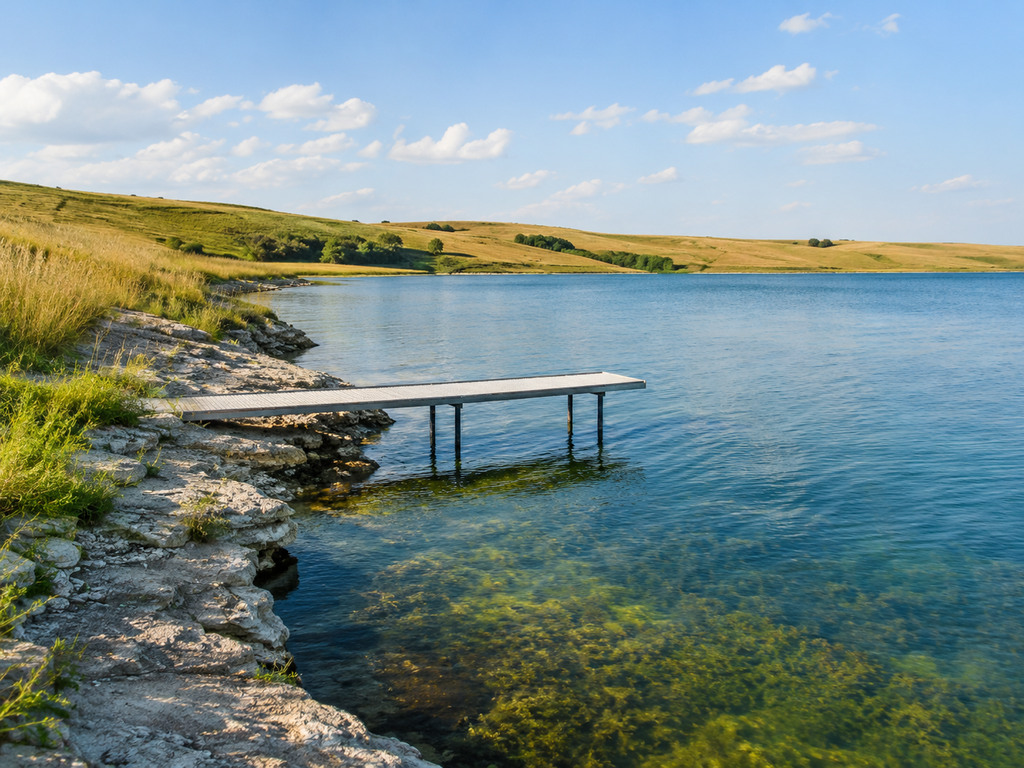
Chase State Fishing Lake is a 109-acre public lake in the Kansas Flint Hills, about three miles west of Cottonwood Falls. Eight fishing piers, a rocky shoreline, boating access and free designated camping make it a practical base for anglers who want a quieter alternative to the region’s larger reservoirs.
Chase State Fishing Lake at a glance
- Location: Three miles west of Cottonwood Falls in Chase County
- Official coordinates: 38.3698, -96.5818
- Lake size: 109 surface acres
- Maximum depth: 45 feet
- Shore access: Eight fishing piers plus rocky and shallow shoreline areas
- Boating: KDWP confirms boating access
- Camping: Free, first-come designated sites along the north shore
- Primary fish: Channel catfish, black bass, saugeye, crappie, white bass and bluegill
Getting there and finding access
KDWP places the lake three miles west of Cottonwood Falls and publishes the coordinates 38.3698, -96.5818. Use those coordinates and the map at the end of this guide rather than relying on a similarly named city lake. Rural service can be inconsistent, so download directions before leaving town.
The official lake page confirms boating access but does not publish ramp dimensions, trailer-parking capacity or surface conditions. Anglers towing a larger boat should call the public land manager at 620-767-5900 before the trip. Park only in established areas and keep roads, gates and the launch clear.
Shore fishing and the eight piers
The eight piers are the lake’s clearest advantage for shore anglers. KDWP describes a shoreline that changes from steep and rocky sections to shallow mudflats at the upper end. Rock, brush and installed fish attractors add cover throughout the lake, while the usually clear water rewards a quiet approach and careful presentation.
Choose a pier or bank section that matches wind and water conditions instead of crowding one spot. Rocky stretches can suit bass and saugeye searches, while protected cover and the piers can be useful for bluegill and crappie. The upper end may become shallow or muddy as water levels change. Never assume that every shoreline section is firm or easily walkable.
What fish live in Chase State Fishing Lake?
KDWP lists channel catfish, largemouth and spotted bass, saugeye, crappie, white bass and bluegill among the lake’s fishing opportunities. Its most recently displayed online fishing report is dated July 2025, so use that report for habitat clues—not as a promise of current catch rates.
- Channel catfish: Work bottom baits near deeper water, inflow areas and windblown banks when conditions allow.
- Black bass: Focus on rocky edges, weedlines, brush and pier cover with presentations suited to clear water.
- Saugeye: Rocky structure and depth changes are logical starting points; the official bathymetric map can help locate breaks.
- Crappie and bluegill: Check brush, pier shade and shoreline cover with small jigs or live bait where legal.
- White bass: Watch for seasonal movement and schooling activity, especially where wind concentrates forage.
Conditions and special limits can change. Check the current KDWP South Central fishing report and the latest official Kansas fishing regulations before keeping fish.
Fishing licenses and regulations
Kansas residents ages 16 through 74 generally need a resident fishing license unless exempt, and nonresidents age 16 and older generally need a nonresident license. Carry the license while fishing and confirm current length, slot and creel limits before casting; do not rely on an older fishing report for today’s legal limits.
Trotlines and setlines are prohibited in Kansas state fishing lakes. Posted notices may add location-specific restrictions. The safest approach is to read the signs at the access area and use the current KDWP regulations page for anything that affects harvest or legal equipment.
Boating and zebra-mussel precautions
Chase State Fishing Lake is an aquatic nuisance species designated water because zebra mussels are present. Before leaving, remove plants and mud, drain every livewell, bilge and bait container, and remove drain plugs before transporting the vessel on a public highway. Dry equipment thoroughly before entering another waterbody.
Do not move live fish or water away from the lake. Live bait collected from an aquatic nuisance species water must not be transported alive elsewhere. These steps protect the next lake and are especially important for kayaks, small boats, anchors, landing nets and waders that retain hidden water.
Free north-shore camping
Primitive camping is allowed only in designated areas along the north shore. Sites are free, first come and cannot be reserved. KDWP limits camping at state fishing lakes to seven consecutive days unless a posted notice or written permit says otherwise; after seven days, the camper and all property must leave that department-managed area for at least five days.
The official lake listing does not inventory electricity, potable water, showers, dump stations or trash service. Treat the sites as primitive: bring drinking water, pack out waste and arrive with a backup plan if the small camping area is full. Follow all posted fire restrictions because Flint Hills grass can ignite and spread rapidly.
Accessibility and facilities
KDWP includes Chase State Fishing Lake on its statewide list of ADA-compliant locations, but the public pages do not identify which piers, parking spaces, paths or restrooms provide the accessible features. Visitors who need a specific surface, transfer space or restroom should call 620-767-5900 before traveling rather than assuming every pier is accessible.
Seasonal planning and safety
- Fish early or late during summer heat and carry more water than a short shoreline session seems to require.
- Watch the full horizon for fast-moving thunderstorms, lightning and strong prairie wind.
- Wear sturdy footwear on loose rock, slick banks and muddy upper-lake flats.
- Use insect repellent and check for ticks after walking through prairie grass.
- Wear a properly fitted life jacket on boats, kayaks and paddlecraft.
- Remember that hunting is allowed on the surrounding public property; wear visible clothing and check seasons when hiking away from developed access.
Build a Flint Hills day trip
The lake pairs naturally with Tallgrass Prairie National Preserve, where visitors can walk prairie trails and explore the historic Spring Hill Ranch. Keep fishing equipment and wet gear contained between stops so zebra-mussel water or plant material never reaches another site.
Plan with official sources
Use the official KDWP Chase State Fishing Lake page for the lake description, piers and camping information. The official bathymetric map can help anglers study depth and structure before arrival. Confirm regulations, lake conditions and any posted closures before every trip.


Leave a Reply